
- Craftsman homes look best with soft, natural plantings, not a yard full of rock.
- Mix a few shrubs for structure, grasses for movement and flowers for color.
- Use shredded wood mulch and a simple stone path. Keep it simple.
Old Towne Orange and the streets around the Chapman University community area are full of 1910s and 1920s Craftsman bungalows: deep porches, stone piers, wood siding and big shade trees. When those homes trade a thirsty lawn for a water-wise yard, the plants should feel like they've always been there. Here's a simple guide to California natives that do exactly that.
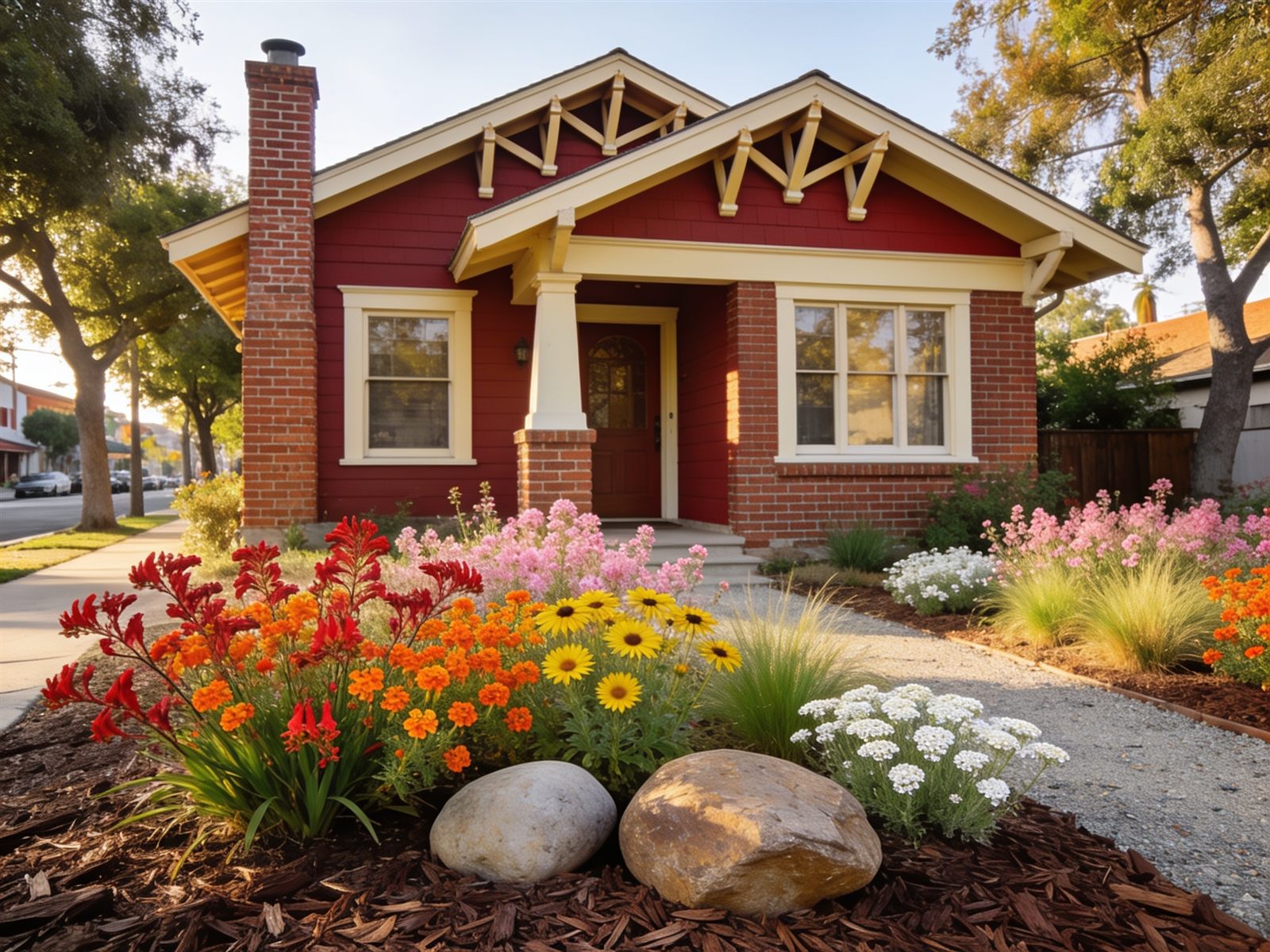
The simple plant palette
| Plant | Color | Sun | Why it works |
|---|---|---|---|
| Cleveland sage | Purple flowers, silver-green leaves | Full sun | Fragrant, soft shape, loved by bees |
| California poppy | Bright orange | Full sun | California's state flower, reseeds itself |
| Yarrow | White or yellow | Sun to part shade | Tough, flat flower clusters, easy |
| Deer grass | Soft green to gold | Sun to part shade | Graceful clumps that move in the breeze |
| California fuchsia | Red-orange | Full sun | Late-summer color, hummingbirds love it |
| Buckwheat | Pink to white | Full sun | Low-water, long bloom, great for pollinators |
| Sticky monkeyflower | Orange | Sun to part shade | Bright spring color in a small shrub |
| Hummingbird sage | Pink | Part shade | Perfect under Old Towne's big shade trees |
How to lay it out
- Start with a path. A flagstone or decomposed granite path to the porch gives the yard a clear shape.
- Add structure. Place a few shrubs like Cleveland sage or monkeyflower near the porch and corners.
- Fill with grasses. Deer grass softens edges along walkways and the parkway.
- Sprinkle in color. Poppies, yarrow, buckwheat and California fuchsia keep something blooming most of the year.
- Finish with mulch and a boulder or two. Dark shredded wood mulch makes the colors pop and holds moisture.
Watering in the first year
New plants need regular water while their roots grow, usually for the first year. After that, most natives need water only now and then in summer, especially on drip irrigation. Overwatering is a more common problem than underwatering with natives.
Want the rebate too?
If you're replacing a living lawn, you may qualify for a turf rebate. The key is applying before the grass comes out. Read how the Orange County turf rebate works and 5 mistakes to avoid, or check your address at socalwatersmart.com.
Common questions
What plants look best with a Craftsman bungalow?
Soft, natural plants: Cleveland sage, deer grass, California poppies, yarrow, buckwheat and California fuchsia, set in mulch with a stone or flagstone path. They match the natural materials of a Craftsman home.
How often do California native plants need water?
Regularly for the first year while roots grow. After that, most need water only occasionally in summer, especially on drip irrigation.
Should I use mulch or rock?
Shredded wood mulch is a great choice around most natives. It holds moisture, keeps roots cool and gives a soft look. Rock works well for paths and dry river beds.
Planning a water-wise yard in Old Towne?
We're based in Orange and design drought-tolerant yards for Old Towne homes. Call 909-767-8391 or send us a message.
Nearby: Chapman University community area · Tustin · Irvine · Costa Mesa
Images on this page are design ideas, not photos of completed projects.